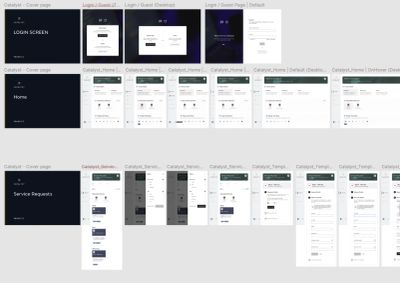
As the UX designer on Project Catalyst, I helped improve the Internal Developer Platform (IDP) to boost adoption and usability among developers. The existing tool faced technical and design limitations, making it difficult for developers to complete tasks efficiently. I contributed through user research, interface design, and prototyping, simplifying workflows like access requests, app deployments, and tool visibility to create a more intuitive, cohesive experience.
Developers and partner teams lacked a centralised hub for software engineering resources, including processes, documentation, and best practice guidelines. This disorganisation created inefficiencies, duplicated work, and slowed down the delivery of new features and applications.
We designed a centralised Internal Developer Platform (IDP) to unify all software engineering disciplines in one place. The platform provides easy access to processes, documentation, and coding best practices, helping developers work more efficiently, reduce errors, and accelerate software delivery.
I worked across UX research, UX Design, UI Design, workshop facilitation and stakeholder collaboration.
I was the lead UX designer on this project, working with the senior UX designer who mentored me once I took over.
The team included 1 UX designer, 4 developers, 1 project manager, 1 agile devilry lead and 1 QA/Test Engineer.
-Understanding developer workflows and pain points
- Reviewing existing platform experiences
- Facilitating discovery and feedback sessions
- Designing wireframes and prototypes in Figma
- Conducting usability and user testing and evaluations
- Supporting the team with Design thinking and UX best practices.
1. Understanding the problem.
2. Research & Discovery
3. Defining the Experience
4. Design & Prototyping
5. Feedback & Iteration
Coming into the project, I had limited experience with the software engineering lifecycle, so I started by building foundational understanding. I reviewed the current platform, explored developer workflows and researched other internal developer platform experiences by conducting competitor analysis to understand common patterns and opportunities.
I quickly realised that every organisation's developer experience tool is shaped by its own internal processes, tools and delivery pressures - so the solution needed to be grounded in JLR's specific user needs rather than generic IDP patterns.
I worked with users and stakeholders closely from the very beggining of this project to understand where developers were experiencing friction. This included looking at how they accessed documentation, requested permissions, found tools and navigated engineering guidance.
Key pain points included:
These insights helped shape the design direction and prioritise the areas that would create the most value.
Using the research findings, I mapped out key journeys and identified where the platform could reduce friction. The goal was to create a clearer, more intuitive experience that helped users complete tasks with less confusion.
I focused on improving:
I created wireframes and prototypes in Figma to explore layout, hierarchy and interaction patterns. The designs focused on making the platform feel more structured, accessible and easy to use.
I kept the interface clean, minimal and luxury adhering the JLR's general design guidance. with clear signposting, simplified page structures and task-led navigation so developers could find what they needed quickly.
I validated concepts with users and stakeholders, gathered feedback and iterated designs based on what worked and what needed refining.
This helped improved the overall experience and ensured the design decision were aligned with real user needs, technical constrains and business goals.

The improved catalyst experience created a clearer and more cohesive internal developer platform (IDP). By centralising key resources and simplifying user journeys, the platform helped reduce friction for developers and made it easier for teams to access guidance, tools and support.
The project strengthened my ability to design for complex enterprise environments, work with technical users and translate unfamiliar domain knowledge into practical, user-centred design solutions.
This project pushed me to get comfortable designing in technical space in which I was initially unfamiliar with. Rather than jumping straight into UI design, I focused on understanding the users, the business context and the software delivery lifecycle.
It taught me the importance of asking the right questions, simplifying complexity and singing experiences that support both user needs and organisational goals.
LinkedIn: https://www.linkedin.com/in/jasleen-sura-abc123/ E-Mail: Jasleen_sura@hotmailoc.uk Phone: 07778881250